Author: Susan de Guardiola

  • Chivers’ Troidrilles (1 of 2)

    I adore dances that are for trios rather than couples.  There are so many interesting things one can do when there are three dancers in the mix rather than just two!  And, of course, it helps the address the problem that historical dance tends to be imbalanced in gender, with many more women than men interested, but many of them desiring to dance in historical gender roles…though those were not always as rigid as people believe.  Figures for one gentleman and two ladies go some way toward addressing this at balls.

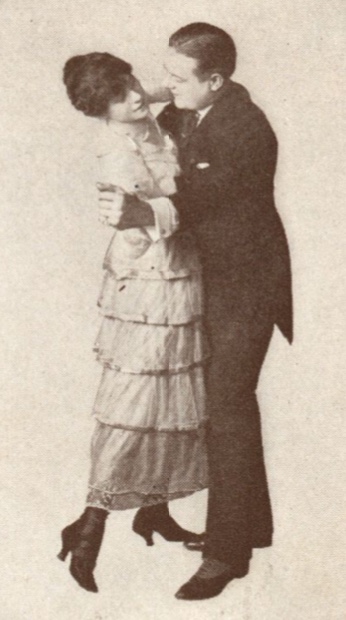
    I've written previously about G. M. S. Chivers' "Swedish" dances, trio country dances that were not actually Swedish, and the Scottish Sixdrilles, a reworking of the French quadrille to be danced by four trios rather than four couples.  The Troidrilles are more in the spirit of the latter (though the name is more harmonious): a miniature "quadrille" of only three figures for four trios published in Chivers' The Dancing Master in Miniature (London, 1825).  The figures are original, though very Chivers in style.
    (more…)

  • Another “Original” Gallopade

    Whatever the Original Gallopade published by dancing master W. G. Wells ("late of London") in The danciad, or companion to the modern ball room (Montreal, 1832) may be, it's certainly not the "original", in the sense of being the first version, since it's clearly a variation of the Original Gallopade published in Companion to La Terpsichore Moderne (Second Edition) by J. S. Pollock (London, c1830).

    The introductory material is also blatantly plagiarized from either Pollock or some common source, so it can hardly be called "original" in the creative sense either, and it is unlikely to be exactly what was originally introduced in 1829 and referenced in the introduction to the dance, which I will append in full at the bottom of this post.  I think that introduction is more about gallopade-as-a-dance-in-general rather than this specific gallopade.  But in any case, it's virtually identical to the introduction in Pollock, and they can't both be the original.

    (more…)

  • The America

    In honor of America’s birthday, here’s an appropriately-named variation by C. A. Carr (creator of the Highland Glide) which is long enough with enough dancing in place that it should probably be classified as a sequence dance and danced by all dancers in unison, as it would be quite the annoyance to other couples if done in the midst of a normal dance.  In M. B. Gilbert’s Round Dancing (Portland, Maine, 1890) it is listed in the redowa/mazurka section and in George Washington Lopp’s La Danse (Paris, 1903) under “Les mazurkas”.  If forced to a decision, I’d call it a polka mazurka and note that it features a stealthy bit of York hidden inside it.

    (more…)

  • July 2021 Gig Calendar

    All right, this is getting a little ridiculous.  Remember I said last month that that series of online classes was really the last one?  Well…it wasn't. 

    So let's try this again:

    Still no in-person classes, but this month I'll be doing one more series (the last one! really!) of cotillion working group classes, using a different potpourri scheme – multiple figures repeating multiple times.  I'll also be lecturing for the Regency Fiction Writers Virtual Conference and teaching hand jive at the fabulous (and free!) online Stockton Folk Dance Camp.  Stockton is a fabulous bargain – a week of classes with an international cast of teachers, tons of dancing and music, and free.

    And if anyone is ready to sponsor in-person classes in the USA again…I'm fully vaccinated and ready to travel!

    Please note: the events listed below are hosted in different cities/countries in different time zones.  Please adjust for your own time zone before planning online attendance!

    (more…)

  • Early Foxtrot: the St. Denis Spiral

    While thinking about mixing foxtrot and maxixe

    The St. Denis Spiral is a minor foxtrot variation from Edna Stuart Lee's Thirty Fox Trot Steps (New York, 1916) which, like the sequences in my previous post, incorporates maxixe styling in the two-step.  Like Lee's Pavlowa Extension, it is named for a famous dancer, in this case Ruth St. Denis.  I am not a scholar of modern dance (theatrical or otherwise), so I have only the most superficial knowledge of her career, but apparently she was indeed noted for incorporating spiral figures, as may be seen in "The Delirium of Senses" from Radha (1906), recorded at Jacob's Pillow in 1941.  I seriously doubt she had anything to do with this foxtrot variation, however; the name is most likely just an homage.

    The sequence is just as easy as the other foxtrot-maxixe combinations:

    (more…)

  • Early Foxtrot: a bit of maxixe

    Maxixe in the foxtrot?  They mixed bits and pieces of every other dance of the ragtime era together, so why not jazz up your foxtrot with a little body sway?

    At least two different sources suggest using maxixe-styled two-step in the foxtrot: Joan Sawyer’s How to Dance the Fox Trot (Columbia Graphaphone Company, New York,1914) and Description of Modern Dances, as Standardized by the New York Society Teachers of Dancing and approved by the Congress of Dancing Societies of America at meeting held December 27th, 1914, in New York City, N. Y. (American National Association Masters of Dancing, Pittsburgh, 1915).

    I’ll start with Sawyer, since her booklet (dated November 23, 1914), is chronologically earlier.  Her foxtrot figures all consist of a pattern of a unique step or sequence followed by eight trotting steps.  Her third figure, the Maxixe-Glide and “Trot”, starts with four measures of “Maxixe two-step” done moving along the line of dance (gentleman forward, lady backward) without turning.  The two-steps begin with the gentleman’s left foot, lady’s right; feet then alternate as usual

    (more…)
  • June 2021 Gig Calendar

    I just can't seem to quit the online classes!  Much to my surprise, I'm doing one more series – this is really the last one, I think – of experimenting on students with fresh cotillion research.  I also hope to add a couple of Connecticut-local, vaccinated-only, in-person classes later this month.

    Please note: the events listed below are hosted in different cities/countries in different time zones.  Please adjust for your own time zone before planning online attendance!

    (more…)

  • May 2021 Gig Calendar

    Moving right along, pandemic-wise, I've now had both vaccinations (Pfizer/BioNTech) and am waiting out the two weeks until my immunity matures.  For May, I'm teaching what will probably be my last full series of online classes and starting to plan out summer travel, which will with luck include both research and, just maybe, some in-person teaching!

    Please note: the events listed below are hosted in different cities/countries in different time zones.  Please adjust for your own time zone before planning online attendance!

    (more…)

  • April 2021 Gig Calendar

    I am now half-vaccinated and anticipate being fully so around the end of the month!  Lessons and events continue to be online-only for me for now, with a return to limited in-person teaching possible as early as June.  This month's highlight for me: after many years, a return to NEFFA (online version) to teach, of all things, 1950s hand jive!  Details below!

    Please note: the events listed below are hosted in different cities/countries in different time zones.  Please adjust for your own time zone before planning online attendance!

    (more…)

  • March 2021 Gig Calendar

    The pandemic continues, but vaccines are rolling out apace in the USA, so I am feeling cautiously optimistic about later this year, though I've no idea when I'll be able to resume significant travel again.  In the meantime, I'm still online-only!

    Please note: the events listed below are hosted in different cities/countries in different time zones.  Please adjust for your own time zone before planning online attendance!

    (more…)

  • February 2021 Gig Calendar

    My excitement for February: returning to DJing blues!  I'm not a big blues dancer, but I love the music and look forward to spinning online for my old Boston-area pals at Bluesy Tuesy and new folks from Powerhouse Blues!  I'll also be returning to my ultra-basic footwork classes and might add another pop-up class or lecture somewhere in there…

    Otherwise: it's still a pandemic.  But the vaccines are coming!

    Please note: the events listed below are hosted in different cities/countries in different time zones.  Please adjust for your own time zone before planning online attendance!

    (more…)

  • January 2021 Gig Calendar

    Well, we're still online-only…this month is planned as a research/writing month, so while I'm doing one brand-new lecture, I'm not planning any other major teaching events, just a few low-key private pop-up classes, which will keep popping up here throughout the month.  I expect more organized public classes to resume in February!

    Please note: the events listed below are hosted in different cities/countries in different time zones.  Please adjust for your own time zone before planning online attendance!

    (more…)

  • December 2020 Gig Calendar

    Well, here we are at the last month of this very strange 2020.  As usual, I'm wrapping up my classes for the year.  As not-usual, they are online classes.  Hoping for better in 2021…

    (more…)

  • A Pumpkin Party 1890

    A Pumpkin Party may seem misplaced in the calendar at this point, but this is specifically a Thanksgiving pumpkin party, taking place the evening of Thanksgiving Day, so it should be considered more like pumpkin pie and less like a jack-o-lantern, though there's definitely an element of that in the theme as well.  The overall concept is more harvest than Halloween, however, similar to the Red Ear Party except more, err, orange.

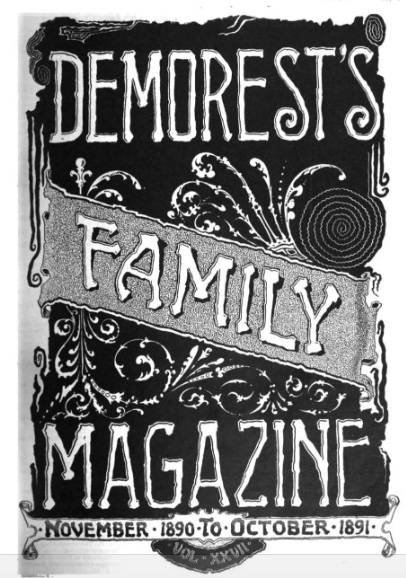
    The description of the party — possibly, but not necessarily, fictional — was published in Demorest's Family Magazine, No. CCCXXIX, Vol. XXVII, No. 1, dated November 1890.  Demorest's began as a fashion magazine but expanded to include a wide range of material, including quite a few little dance tidbits.

    The pumpkin theme began from the very start, with the invitations, which were sent on "pumpkin-colored round cards".  The party was held in a "pretty little stone barn and stable" with illuminated "pumpkin lanterns of all shapes and devices, some wearing the old familiar goblin-like 'eyes, nose, and mouth.' while others were cut in stars and flowers and geometrical designs."  This is, quite literally, a barn dance.

    (more…)

  • November 2020 Gig Calendar

    November is going to feel strange this year, with no trip to Gettysburg for the Remembrance Day Balls.  Hopefully they will be back next year!  In the meantime, I'm going to spend November ping-ponging from the 17th century (unusual for me) to the early 20th, with a detour for footwork classes focusing mostly on late 18th to early 19th century dance.  I'm especially excited about both the Playford Then and Now Festival, hosted by The Historical Dance Society (formerly the Dolmetsch Historical Dance Society) in the UK with a great lineup of speakers, and the chance to repeat for the Historical Tea and Dance Society in California a lecture I gave for a university group back in September on the intertwined lives of the dancers Vernon and Irene Castle and the musician James Reese Europe.  Both the Castles and Europe are frequently discussed, lectured, and written about separately.  I'm thrilled to bring their stories together!

    (more…)

  • The Way it Ended, 1855

    I came across this story in a California newspaper, The Weekly Placer Herald, and didn't find it particularly believable.  But it was not original to the Herald; the attribution at the end is to the Albany Dutchman, which seems to have been more of a weekly humor publication than a newspaper.  Per the Library of Congress's Chronicling America website, it described itself  in 1849 as "A weekly newspaper-devoted to fun, literature, good advice, women and other luxuries."  I don't have any way to check the attribution at the moment, as the Albany Dutchman doesn't seem to be online, but that fits with my impression that this is a tall tale, not an actual incident.  It nonetheless makes a light-hearted ending to my month of masquerades!

    In the story, two friends, Bob and Frank, lie to Bob's wife about his having to help a sick uncle.  In reality, they are sneaking off to a masquerade ball.  While Bob is a married man, Frank is "a roue, and as a matter of course is a great favorite with the ladies—roues always are." 

    (more…)

  • A Louisville Masquerade, 1843

    Here’s a lively account of a jolly and slightly drunken masquerade held in Louisville, Kentucky, in 1843.  This account has a little of everything: costumes, bad puns, a bit about the dances, and the effects of alcohol on the revelers.  It’s too long a report to comment on every bit of it, but the entire thing is transcribed at the bottom of this post.

    The report starts out with a lot of philosophy about the joys of masquerades, but the first really useful bit is that as iA Few Friends, the unmasking is done at supper-time, which was probably around midnight:

    The unmasking at the supper table is often a great source of laughter and surprise, when it discovers the faces of numerous acquaintances who have been playing off their wit and raillery against each other all the evening, under their various disguises. 

    All sorts of people attended masquerades, which is part of what made them scandalous.  In Kentucky, at least, this mixing was not to be feared, though I suspect the upper classes might have differed on this point:

    (more…)

  • Wandering around in the dark, 1912

    Since wandering around with small lanterns in a dark room looking for people to dance with also seems like a suitable spooky, or at least entertaining, activity for Halloween balls and cotillion parties, here are another pair of cotillion figures from H. Layton Walker’s Twentieth Century Cotillion Figures (Two Step Publishing Company, Buffalo, New York, 1912) that feature that very activity!

    These are both simple mixer figures in which pairs of ladies and gentlemen must find their designated match, either by number or by name.

    (more…)

  • Professor Webster’s Masquerade Party, 1876

    On March 18, 1876, the Morning Herald of Wilmington, Delaware, published a short blurb covering a recent “masquerade party” given by one Professor Webster at the Dancing Academy Hall.  Unusually, the newspaper coverage says nothing about the costumes other than that there were enough of them to “have exhausted a first class costumer’s establishment, and have taxed the ingenuity of an artist.”  Instead, we get an actual dance program, consisting entirely of quadrilles, Lanciers, and glide waltzes, and accompanied by names which might be masquerade costumes, though I’m not certain of that.

    Professor Webster was a long-time Wilmington dancing master – he was still teaching as late as June 4, 1899, when the Sunday Morning Star reported on the closing reception of his current series of dance classes (see about two-thirds of the way down the first column here.)

    Here’s the list of dances, in order.

    (more…)

  • A Fancy Dress Party (from A Few Friends), 1864

    A Few Friends, by Korman Lynn, was serialized in nine parts in Godey's Lady's Book during the year 1864.  The serial doesn't have a lot of plot; it describes eight evenings of a group of friends gathering together to, for the most part, play parlor games.  It's great for anyone who wants to research mid-nineteenth century parlor games, which are described in elaborate detail, but the only section of any real interest to me is the final one, in which the friends gather for a fancy dress party.

    To pick up the story at this point, it is only necessary to know that the kind and generous Ben Stykes has been quietly pursuing the lively Mary Gliddon from the beginning of the story, though a certain Mr. Hedges, a young man from Liverpool, is also interested in her.

    Even a single part of the story is too long for me to transcribe here, but I'll quote the costume descriptions, some of which are detailed and unusual, and the resolution of the romance.

    (more…)

  • October 2020 Gig Calendar

    Life continues on in pandemic time, which feels like a cross between time flying by and a sort of vague timelessness. 

    October will be a quiet teaching month for me while I work on a new research project for a festival next month, but I have a new double series of California-based basic country dance footwork classes this month before we probably take a break over the holiday period.

    (more…)

  • September 2020 Gig Calendar

    Well, I had hoped to be moving back to Russia this month as usual, but it's clearly not to be.  So, online lessons continue.  September is going to be a (relatively) lively month for me, bookended by a lecture and class at a Russia-based festival at the beginning of the month and wrapping up with a pair of USA-based lectures at the end.  In between, my double series of California-based basic country dance footwork classes continues!

    (more…)

  • The Nahant Quadrilles (4 of 4)

    The final post in my series on The Nahant Quadrilles: figure five and some thoughts on the quadrille as a whole!

    The original wording:

    1st two cross over give right hand.  And back give left hand.  Form a line.  Balancez.  Half Promenade.  Forward 4.  Half right & left to places

    This one should look familiar to anyone who has danced the French quadrille: it’s a slightly shortened version of the third figure, La Poule.  This makes it quite easy to reconstruct, but it does present a problem with the music.  The shortened figure is twenty-four bars, while the music has four strains with no indications of any repeat structure.  Conveniently, however, the fourth strain is a transposed and elaborated version of the A strain, so for a twenty-four bar figure one could play A + BCA’x4 or perhaps save the A’ strain for the last time through and play A + BCAx3 + BCA’.  The Spare Parts recording ignores the A’ strain and just plays A + BCAx4, which works fine for dancing my reconstruction.

    (more…)

  • The Nahant Quadrilles (3 of 4)

    And now we come to figure four, the biggest mess in the entire quadrille!  Problems with the figures, problems with the music, problems correlating the two…I believe in my conclusions, but I can't deny that there's a lot of guesswork involved in any reconstruction of this figure.

    First, the music.  Take a look at Figure 4's tune, "Georgette", here.  There are three eight bar strains marked with a Da Capo al segno, to which my first response was, what segno?  There is no segno!  There's a Fine, oddly located at the end of the B strain, so presumably it was meant to be Da Capo al Fine.  But quadrille music usually ends on the A strain, and while the length of the figure is the next problem to consider, it's difficult to come up with a reasonable repeat structure that has AB at the end.  In thirty-two bars, A + BCAB repeated, perhaps, but in twenty-four bars, it's just impossible. 

    (more…)

  • The Nahant Quadrilles (2 of 4)

    Onward we go, with figures two and three of The Nahant Quadrilles!

    For figure two, the music (available here) has two strains with a Da Capo, which works without any tweaking.  The Spare Parts recording matches my reconstruction.

    The original language for the figures:

    Four ladies grand chain.  Forward & back 1st two.  Back to back.  Repeat 4 times.

    This is a very short figure, only sixteen bars.  The second half is very straightforward: the first pair (first lady and opposite gentleman) go forward and back then perform a dos-à-dos.  As in the first figure, each time through this is a different pair.

    The first half, however, presents an interesting choice.

    (more…)